
Sepet 0

KORİANDER
Koriander
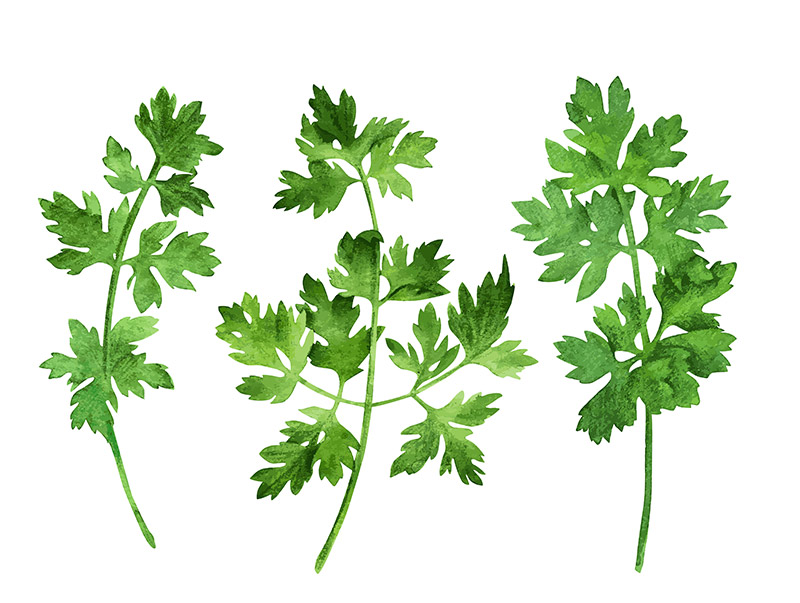
Coriander (Coriandrum sativum L.), or coriander, is a spice belonging to the Apiaceae family that is widely used in Mexican, Indian and Asian cuisine (under the name Cilantro). As an herbal medicine, it has been in use for centuries. Hippocrates praised Coriander as an herbal medicine. It is also known that the therapeutic properties of Koriander are mentioned in Sanskrit inscriptions and the Old Testament.
Ingredients of Koriander
Koriander seeds and essential oils of the plant have been very actively investigated for their chemical composition and biological activities. Koriander has been found to have antimicrobial, antioxidant, hypoglycemic, hypolipidemic, anxiolytic, analgesic, anti-inflammatory, anti-convulsive and anti-cancer activity, mostly for the relief of gastrointestinal system disorders. The terpenes it contains have analgesic effect, it shows antibacterial effect with “Plantarici CS” which is an antimicrobial peptide, long chain (C 6-C10) is effective against Listeria monocytogenes with its alcohol and aldehyde content, partially prevents proliferation in drug-resistant breast cancer and colon cancer cells with linalool, which is also a terpene, has anticonvulsive effect with the same compound, with its hydrophilic content (polysaccharides, ascorbic acid, phenols, flavonoids and anthocyanins) have antioxidant effect, linalool, geranyl acetate and γ-terpinene may be antidiabetic by lowering serum sugar level with synergistic effect, y-linoleic acid, oleic acid, palmitic acid, stearic acid and ascorbic acid fatty acids have been proven to have cholesterol-lowering effect with various studies (1).
Are There Side Effects of Koriander?
A very minor dermal allergic reaction may rarely occur in people sensitive to the linalool contained in Koriander. Koriander is recognized by the FDA as a safe food supplement (2, 3).
Use in Special Populations and Cautions
Use in Pregnancy and Lactation: There is insufficient scientific data for use in pregnancy and lactation.
Use in Special Populations: Serum glucose levels of diabetic patients should be carefully monitored during the use of anti-diabetic drugs (4).
CHORIANDER IN HEAVY METAL CHELATION
Mercury Toxicity and the Blood-Brain Barrier
Before discussing the importance of Koriander’s place in the heavy metal decontamination protocol, it is necessary to mention amalgam, an alloy of silver, tin and copper mixed with mercury, which has been widely used as a filling material in dentistry. The reason for using mercury, which makes up 45-50% of the mixture in amalgam, is that mercury can bind the metals together and make the mixture a durable filling material. Dentists have preferred amalgam to other fillings for years because it is cheap, easy to use and lasts for many years. Mercury evaporates from amalgam fillings continuously even in the absence of any provocation. The amount of mercury evaporation increases especially when making, correcting or removing amalgam fillings, but also when chewing and in very acidic or hot drinks and in the presence of other metals. Being hydrophobic and lipophilic, mercury vapor does not bind to oxygen and 100% of it is absorbed through the nasal and oral mucosa and the alveolar part of the teeth. In plasma, 50% of mercury is bound to erythrocytes and 50% circulates freely. In erythrocytes, mercury is found as 90% methylmercury. The lipophilicity of mercury (fat-soluble-fat-loving) and its capacity to circulate freely allow it to travel rapidly to organs and cross the blood-brain barrier. When it reaches the organs, especially the brain due to its lipophilicity, mercury (Hg), which easily crosses the cell membrane, is oxidized to Hg++, which is very toxic. This form of mercury binds especially to proteins containing sulfur (thiol group) (e.g. cysteine amino acid) (5). After entering the brain tissue, it cannot go back because it is bound to proteins and remains in the central nervous system. Thus, the half-life of mercury that enters neurons in the brain and binds to proteins is 13-28 years.
Mercury (Hg++) entering the cell binds to Thymidine and Uracil nucleic acids in DNA and causes cellular DNA damage. After mitochondrial DNA damage, it causes dysfunction and even death in mitochondria. When energy gain decreases as a result of the death or damage of mitochondria in the cell, symptoms such as chronic fatigue and exhaustion occur.
In the peripheral nervous system, Hg++ in nerve cells binds to and damages tubulin, the cell body protein. Since microtubulin in the axon of the nerve cell is a tubular structure that regulates entry into and exit from the cell, the transport system of the nerve cell is disrupted and mercury that has entered the cell cannot be taken out of the cell again.
In cells other than nerve cells, since mercury disrupts the ion channels of the cell membrane, Hg++ accumulating in the cell causes complete disruption of these channels at increasing concentrations, preventing mercury from leaving the cell.
Chelators used in classical chemical chelation therapy (DMSA and/or DMPS, etc.) remove mercury from the cell and make it available for excretion through the kidneys, allowing it to be excreted in the urine. However, in doing so, they are likely to worsen the patient’s symptoms as they place an increased burden on the kidney, which is usually already damaged beforehand. Frequently, the kidneys are no longer able to excrete mercury at all in mercury toxicity. This is why in severe mercury poisoning only trace amounts of mercury are found in the urine.
The natural excretion of mercury by the body is partly through the urine, mostly through the feces and intestines and to a lesser extent through the hair. Natural chelators (Koriander…) all promote excretion via the intestinal tract. The advantage of chemical chelators over Koriander is the degree of chelation and they are preferred especially in acute and severe poisoning. Natural agents, on the other hand, are more frequently used in chronic toxicity and ensure that heavy metal excretion from the body is slow, safe and protects the kidneys (6).
Koriander is the only agent known to mobilize and remove heavy metals such as mercury, cadmium, lead and aluminum stored in the brain or nervous system by crossing the blood-brain barrier (7, 8, 9, 10). It allows the heavy metals that it removes intracellularly (brain, peripheral nervous system and other tissues) to pass into the connective tissue, that is, to relocate. It has the capacity to remove chromium, copper, iron, zinc, lead, nickel and cadmium intracellularly (11, 12).
Koriander removes and mobilizes neurotoxins such as mercury, cadmium, lead and aluminum from the central nervous system and bones. Neurotoxins that have been removed and mobilized from the cell by Koriander settle in the connective tissue.
The body tries to eliminate neurotoxins through its organs of excretion (kidneys, liver, skin, respiration…). In general, the waste material is transported to the small intestine via bile and excreted through the gastrointestinal tract. However, many neurotoxins are reabsorbed by the enteric nervous system in the intestines due to their lipophile/neurotroph nature. The enteric nervous system has more neurons than the spinal cord. Both newly ingested and newly mobilized neurotoxins, which are transported by axonal transport to the spinal cord (sympathetic neurons) or brainstem (parasympathetic neurons) and from there back to the brain, need to be available in the body (Chlorella and Barlauch) to remove them so that they do not return to the brain. The detoxification treatment can be achieved over a long period of time with the full cooperation of the patient and the doctor, informing the patient and ensuring his/her compliance with the treatment. In chelation therapy, when all phytochelators are used in harmony and in combination, combined with neural therapy and bowel and liver regulation, the chances of success in achieving true detoxification increase significantly.
REFERENCES
1. Laribi, B, Kouki, K, M’Hamdi M, BeƩ aieb T. Coriander (Coriandrum sativum L.) and its bioactive constituents. Fitoterapia. 2015; 103:9-26.
2. Mandal S, Mandal M. Coriander (Coriandrum sativum L.) essential oil: Chemistry and biological activity. Asian Pacifi c Journal of Tropical Biomedicine.2015; 5(6):421-428.
3. Burdock GA, Carabin IG. Safety assessment of coriander (Coriandrum sativum L.) essential oil as a food ingredient. Food and Chemical Toxicology. 2009; 47 22-34.
Prachayasiƫ kul V, Prachayasiƫ kul S, Ruchirawat S, Prachayasiƫ kul V. Coriander (Coriandrum sativum): A promising functional food toward the well-being. Food Research International. 2018; 105:305-323.
5. MuƩ er J, Naumann J, Walach H, Daschner F. Amalgam: Eine Risikobewertung unter Berücksictigung der neuen Literatur bis 2005. Gesundheitswesen.2005; 67: 204-2016.
6. Klinghardt D, Mercola J. Mercury Toxicity and Systemic EliminaƟ on Agents. Journal of NutriƟ onal & Environmental Medicine. 2001; 11: 53-62.
7. Yadav U, Mishra M. Heavy metal toxicity and neuro-degeneration. Novus International Journal of Biotechnology & Bioscience. 2013; 2(2): 18-51.
8. Omura Y, Beckman SL Role of mercury (Hg) in resistant infections & effective treatment of Chlamydia trachomatis and Herpes family viral infections (and potential treatment for cancer) by removing localized Hg deposits with Chinese parsley and delivering effective antibiotics using various drug uptake enhancement methods. Acupunct Electrother Res. 1995 Aug; 20(3-4): 195-229.
9. Omura Y, Shimotsuura Y, Fukuoka A, Fukuoka H, Nomoto T. Significant mercury deposits in internal organs following the removal of dental amalgam, & development of pre-cancer on the gingiva and the sides of the tongue and their represented organs as a result of inadvertent exposure to strong curing light (used to solidify synthetic dental filling material) & effective treatment: a clinical case report, along with organ representation areas for each tooth. Acupunct Electrother Res. 1996 Apr; 21(2): 133-160.
10. Aga M, Iwaki, K, Ueda Y, Ushio S, Masaki N, Fukuda S, Kurimoto M. Preventive eff ect of Coriandrum sat vum (Chinese parsley) on localized lead deposition in ICR mice. Journal of Ethnopharmacology,. 2000; 77(2-3): 203-208.
11. Khalid S, Shahid M, Niazi NK, Murtaza B, Bibi I, Dumat C. A comparison of technologies for remediation of heavy metal contaminated soils. Journal of Geochemical Exploration. 2017; 182:247-268.
12. Aggarwal H, Goyal D. Chapter 5 Phytoremediation of some heavy metals by agronomic crops. Developments in Environmental Science. 2007; 79-98.