 Bilgi Bankası
Wild Horseradish
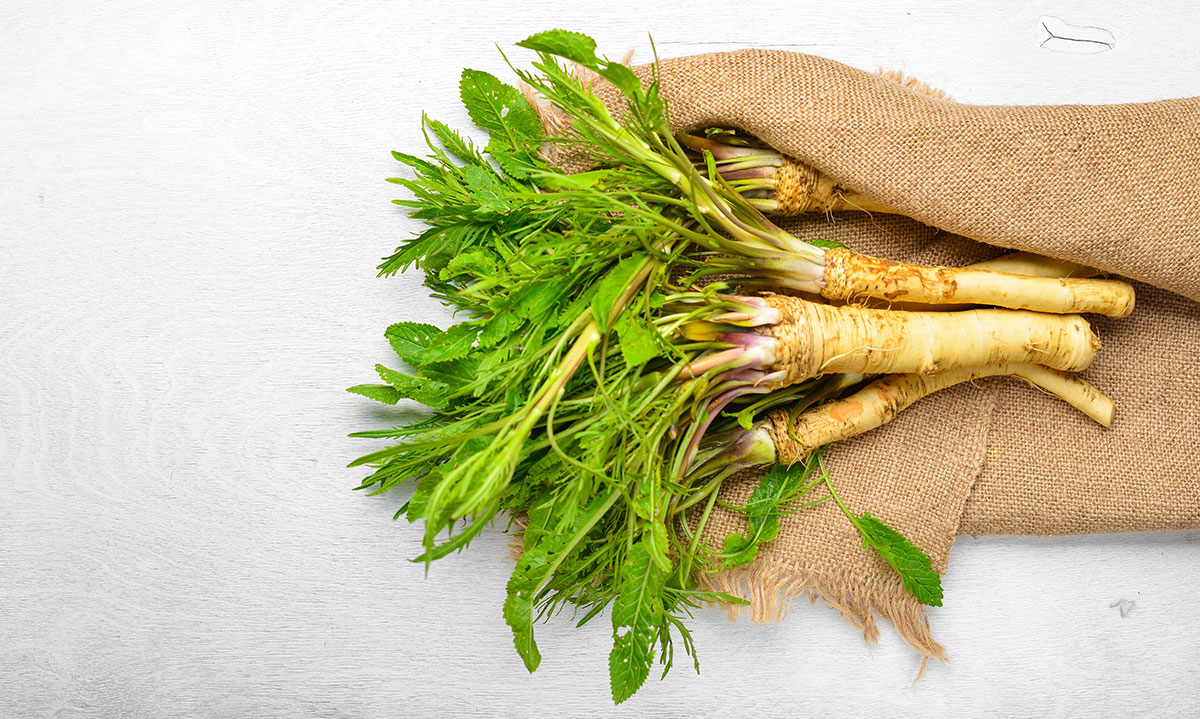
Wild horseradish (Armoracia rusticana) is a plant from the cruciferous family. It contains high concentrations of sinigrin and isothiocyanates, known for their powerful antimicrobial properties.
Wild Horseradish – Nature's Pungent Powerhouse
Wild horseradish (Armoracia rusticana) belongs to the cruciferous vegetable family (Brassicaceae) and is native to southeastern Europe and western Asia. For centuries, this plant has been used both as a condiment and as a healing remedy in folk medicine. The root of wild horseradish is known for its sharp, penetrating flavor, which is caused by the mustard oils it contains.
Sinigrin and Isothiocyanates
The most important bioactive compound in wild horseradish is sinigrin, a glucosinolate that is converted into allyl isothiocyanate (AITC) by the enzyme myrosinase during processing. This mustard oil is responsible for the characteristic pungency and possesses remarkable biological properties. The concentration of mustard oils in wild horseradish is significantly higher than in many other cruciferous vegetables, making it an exceptionally potent source of these beneficial compounds.
Antimicrobial and Anti-inflammatory Effects
The isothiocyanates in wild horseradish possess pronounced antimicrobial properties. They are effective against a broad spectrum of pathogenic microorganisms:
- Antibacterial: Effective against both gram-positive and gram-negative bacteria, including Helicobacter pylori
- Antifungal: Inhibits the growth of various fungal species
- Antiviral: Supports defense against viral infections
- Anti-inflammatory: Reduces inflammatory processes throughout the body
In traditional European medicine, wild horseradish is frequently used for respiratory infections, urinary tract infections, and digestive complaints. The mustard oils act as natural antibiotics and can promote blood circulation. When applied externally, horseradish stimulates local blood flow and can provide relief for muscle and joint pain.
Additionally, wild horseradish contains vitamin C, potassium, calcium, and dietary fiber that support overall health. The combination of mustard oils and vitamin C makes it particularly valuable for strengthening the immune system during the cold season.
Bilgi Bankası